
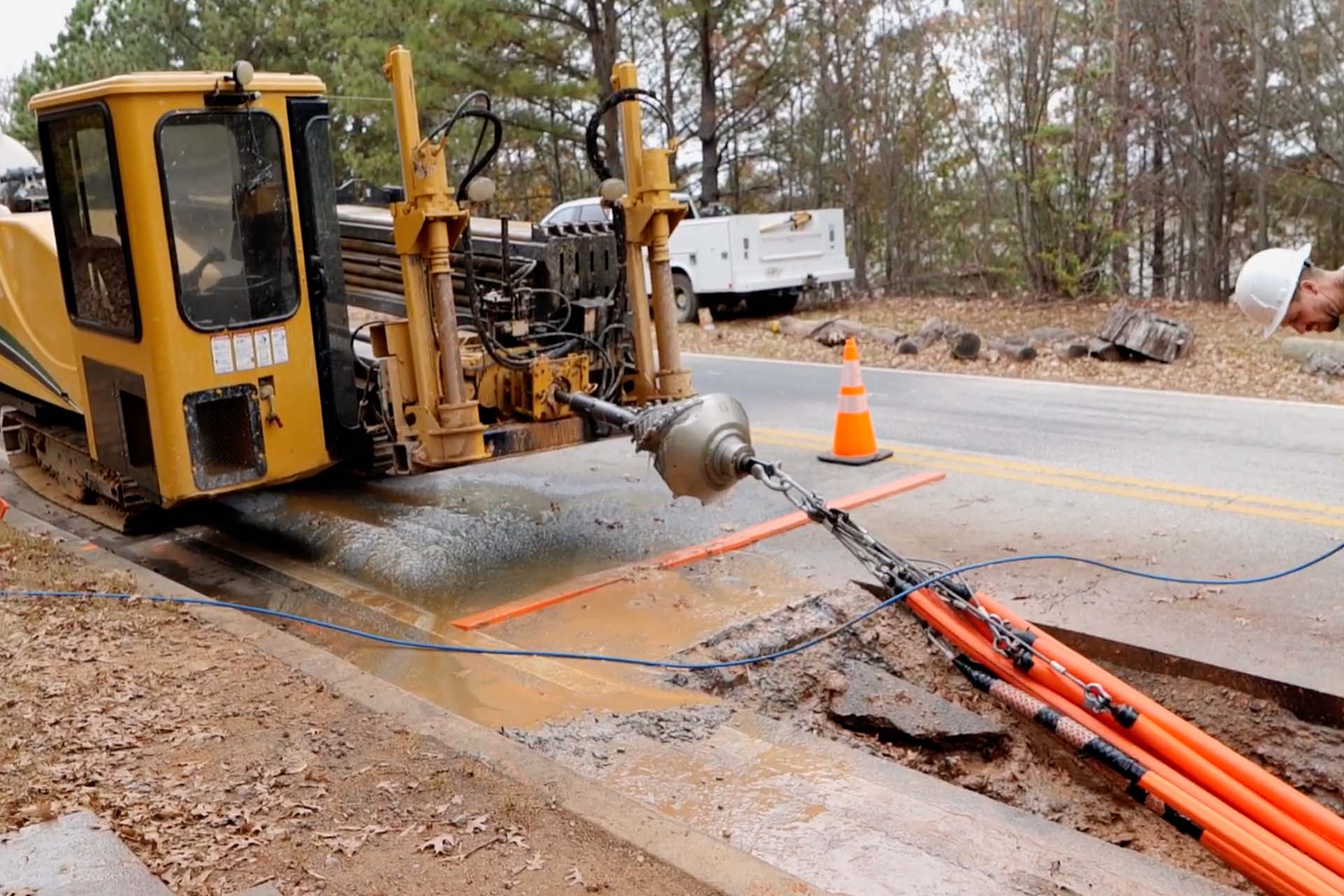
Directional drilling, also known as horizontal directional drilling or HDD, has become the preferred solution for installing underground utilities such as water lines, power, and especially fiber internet cable. Instead of digging long open trenches, a guided drill head creates a clean underground path for conduit, keeping the surface above virtually untouched.
By using HDD, property owners avoid major damage to their yards and driveways, while contractors complete projects faster and with greater precision.
Water Lines
Directional drilling is an excellent solution for installing water lines where trenching would cause unnecessary damage.
Common water line applications include:
- Residential water service lines
- Commercial and industrial water mains
- Water lines installed under roads, driveways, or sidewalks
- Water lines crossing creeks or drainage areas
Because the drill path is controlled and precise, water lines can be installed at the proper depth while avoiding obstacles and existing utilities.
Sewer and Drain Lines
Sewer and drain lines can also be installed using directional drilling, especially when traditional excavation is impractical.
Typical uses include:
- Sewer laterals from homes or businesses
- Gravity-fed sewer lines where slope requirements can be maintained
- Drainage lines installed beneath paved or landscaped areas
Directional drilling allows for accurate bore paths that help maintain consistent grade while reducing surface restoration costs.
Gas Lines
Natural gas and propane lines are commonly installed using directional drilling for both residential and commercial projects.This method is ideal for:
- Gas service lines to homes or businesses
- Gas lines installed under roads, sidewalks, or driveways
- Projects requiring minimal disturbance in developed areas
Directional drilling provides a controlled installation process that helps protect surrounding infrastructure and property.
Electrical Conduit
Electrical conduit is one of the most frequent uses for directional drilling.
Applications include:
- Power service lines to homes and buildings
- Underground electrical runs for shops, barns, or outbuildings
- Utility crossings beneath roads and parking lots
By boring underground, electrical conduit can be installed cleanly and efficiently without open trenches.
Fiber Optic and Communications Lines
Directional drilling is widely used for modern communication infrastructure. This includes:
- Fiber optic cable installation
- Internet and broadband lines
- Telephone and data lines
- Security and communication conduit
Because fiber and communication lines often need to cross roads or developed property, directional drilling is often the preferred method.
Irrigation and Water Management Lines
Directional drilling works well for irrigation systems and water management solutions. Examples include:
- Main irrigation supply lines
- Large landscape irrigation systems
- Agricultural water lines
- This allows irrigation systems to be installed without tearing up established lawns, fields, or landscaping.
Why Directional Drilling Is Often the Better Choice
Directional drilling offers several advantages over traditional trenching:
Minimal surface disruption
- Reduced restoration and repair costs
- Ability to install utilities under obstacles
- Faster project completion in many cases
- Cleaner and more precise installations
For property owners, contractors, and municipalities, these benefits often translate into lower overall project costs, minimal property damage, and better long-term results.