
North Georgia continues to grow as new homes, businesses, and developments spread into areas that were once more rural. Communities around Gainesville, Dawsonville, and Dahlonega are seeing increased demand for dependable water, sewer, electrical, gas, telecommunications, and fiber infrastructure.
Installing those utilities is not always easy.
The foothills and mountain terrain of North Georgia create challenges that are very different from those found in flatter areas. Steep grades, rocky ground, wooded properties, winding roads, creeks, and limited access can make traditional trenching difficult, disruptive, and expensive.
Horizontal Directional Drilling gives contractors, developers, municipalities, and utility providers another way to install critical underground infrastructure while reducing the amount of excavation required at the surface.
North Georgia Terrain Creates Unique Challenges
The landscape throughout Gainesville, Dawsonville, Dahlonega, and the surrounding region can change quickly from one project to the next.
A job may begin in red clay, move into rock, cross a steep slope, and finish near a roadway or wooded property. Utility routes may also need to pass beneath driveways, roads, drainage areas, existing landscaping, or other obstacles.
Traditional excavation can require long trenches, significant clearing, pavement removal, and extensive restoration. On steep or rocky sites, it may also require additional grading and stabilization before work can move forward.
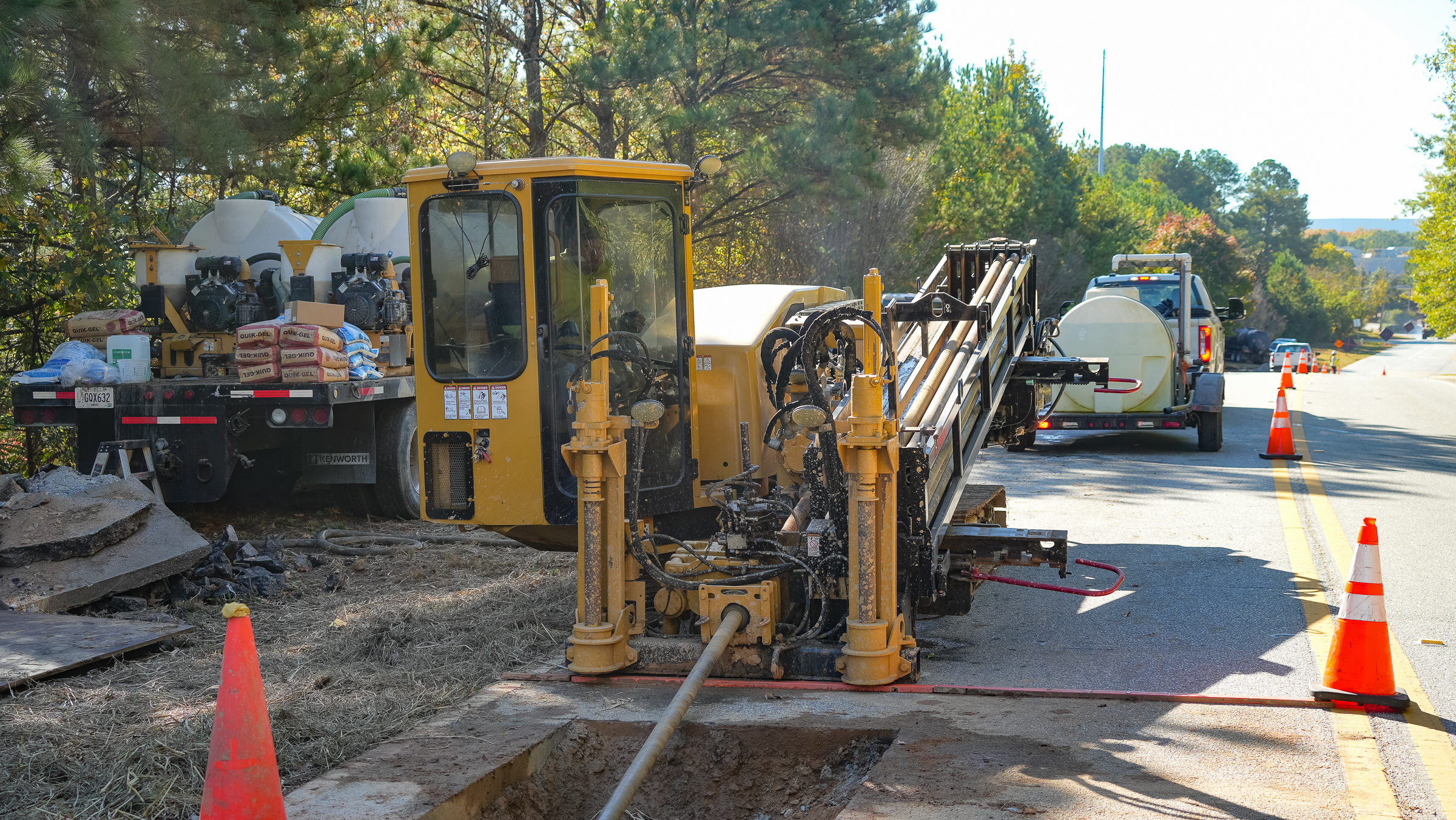
Directional drilling allows crews to establish a planned underground bore path and install utilities with a much smaller surface footprint.
Working Through Rock and Changing Ground Conditions
Rock is a common challenge throughout North Georgia.
Underground conditions are not always consistent, and a single bore may encounter clay, compacted soil, fill material, weathered rock, and harder formations. These changes require experienced operators, proper tooling, dependable equipment, and careful planning.
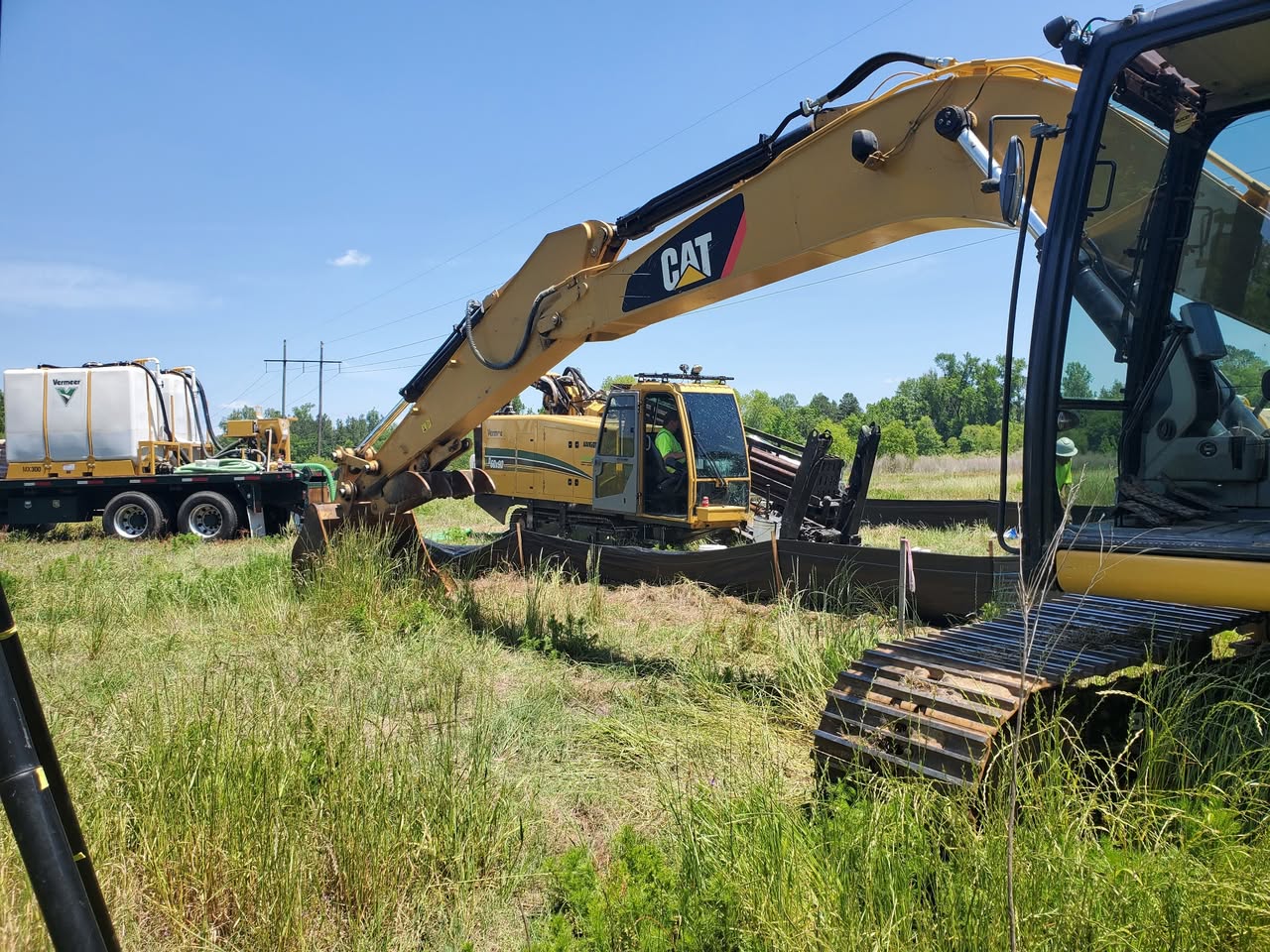
Rocky terrain does not automatically mean that a utility line must be installed through a large open trench. With the right equipment and experience, HDD can be used to create an underground path through difficult ground while preserving more of the property above it.
This can be especially valuable on mountain roads, wooded sites, commercial properties, and developments where extensive excavation would create unnecessary disruption.
Supporting Growth Around Gainesville
Gainesville serves as an important commercial, healthcare, industrial, and residential center for North Georgia. Growth throughout Gainesville and Hall County continues to create demand for expanded utility systems.
New neighborhoods, commercial properties, industrial facilities, medical campuses, road improvements, and public infrastructure projects all depend on reliable underground utilities.
In developed areas, directional drilling can help install or relocate utilities beneath roads, parking areas, entrances, sidewalks, and active properties without opening a trench across the entire route.
That helps reduce disruption for traffic, nearby businesses, and property owners.
Expanding Infrastructure in Dawsonville
Dawsonville and the surrounding area continue to see new residential and commercial development as growth moves farther north from the Atlanta metropolitan area.
Much of this development takes place on wooded, sloped, or previously undeveloped land. Before new buildings can be completed, the property must be connected to the underground systems that support it.
Directional drilling can be used for:
- Water lines
- Sewer infrastructure
- Electrical conduit
- Natural gas lines
- Telecommunications
- Fiber optic networks
HDD is particularly useful when these utilities need to cross roads, driveways, drainage areas, or established portions of a property without extensive excavation.
Directional Drilling for Roads, Slopes, and Wooded Properties
One of the greatest advantages of HDD is its versatility, allowing utilities to be installed beneath busy roads and intersections, residential driveways, parking lots, steep embankments, wooded properties, creeks and drainage areas, existing landscaping, and developed commercial sites. Instead of excavating from one end of the utility route to the other, crews work from designated entry and exit points, reducing pavement removal, clearing, erosion concerns, and restoration work once installation is complete.
North Georgia terrain can be unpredictable, and successful utility installation requires careful consideration of ground conditions, elevation changes, existing utilities, equipment access, bore depth, and the route the new utility must follow, often requiring specialized equipment capable of working through rock while maintaining accuracy over challenging bore paths.
At Graves Directional Drilling, our team brings more than 125 years of combined experience to underground utility projects throughout Georgia and the Southeast, with the crews, equipment, and expertise needed to work in urban areas, growing communities, and rugged mountain terrain. As Gainesville, Dawsonville, Dahlonega, and surrounding North Georgia communities continue to grow, dependable underground infrastructure remains essential, and directional drilling helps install that infrastructure while minimizing major excavation, protecting developed property, and navigating the region’s difficult terrain, whether the project involves water, sewer, electrical, gas, telecommunications, or fiber installation.
Preserving the Character of Dahlonega and the Surrounding Mountain Areas
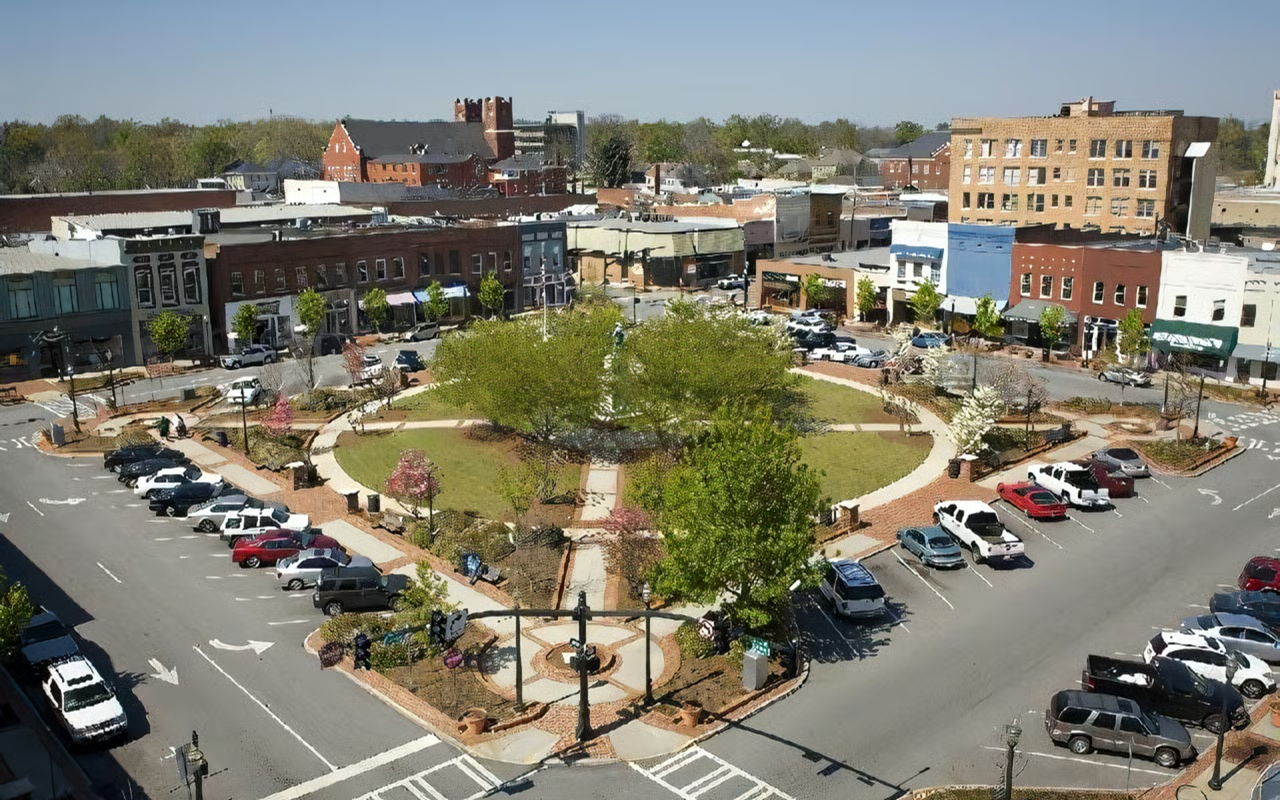
Dahlonega combines a historic downtown, established neighborhoods, growing commercial areas, and rural mountain properties. Utility work in this type of community requires a careful approach.
Long open trenches can affect traffic, landscaping, mature trees, paved surfaces, and access to homes or businesses. Directional drilling helps reduce those impacts by limiting excavation to planned work areas while the utility is installed underground.
This allows infrastructure improvements to move forward without unnecessarily disturbing the roads, properties, and natural landscapes that give the area its character.